Ayodhya Foreign Education Services

2027 Scholarships for International Students in France, Germany, and Ireland.

Your blog category

Highest Paying Jobs After Studying Abroad (2026 Guide)

One of the biggest reasons students choose to study abroad is the opportunity to secure high-paying jobs and build a successful global career. After completing your degree, the right course and skills can help you land jobs with excellent salary packages and long-term growth. In this guide, we’ll explore the highest paying jobs after studying abroad. 💼 Why Do Jobs Abroad Pay More? Jobs abroad often offer higher salaries due to: This makes studying abroad a great investment for your future. 🚀 Top Highest Paying Jobs After Studying Abroad Here are some of the most in-demand and high-paying career options: 1. Software Engineer / IT Professional One of the highest paying and most popular career options. High demand across all major countries. 2. Data Scientist / AI Specialist A rapidly growing field with excellent pay. Companies rely heavily on data, making this field highly valuable. 3. Healthcare Professionals Healthcare jobs are always in demand globally. Strong job security and growth opportunities. 4. Investment Banker / Finance Professional One of the most prestigious and high-paying careers. Ideal for commerce and finance students. 5. Engineering Professionals Engineering remains a top career choice. High demand in developed countries. 6. Business & Management Roles Perfect for students pursuing business degrees. Offers fast career growth and leadership opportunities. 7. Cybersecurity Specialist With rising digital threats, this field is booming. High demand and limited skilled professionals. 8. Digital Marketing & E-commerce A growing field with global demand. Great option for creative and analytical minds. 🌍 Factors That Affect Your Salary Your salary depends on several factors: 🎯 Tips to Get High-Paying Jobs To maximize your salary potential: ⚠️ Common Mistakes to Avoid Avoiding these mistakes can significantly improve your career prospects. Final Thoughts Studying abroad can open doors to some of the highest paying jobs in the world. However, success depends on choosing the right course, building strong skills, and staying proactive in your job search. With the right strategy, students can achieve financial success and build a rewarding global career.

Highest Paying Jobs After Studying Abroad (2026 Guide) Read More »

UK vs. Canada – Which is Better for Indian Students? (2026 Guide)

Choosing between the UK and Canada is one of the most common decisions for Indian students planning to study abroad. Both countries offer excellent education systems, globally recognized degrees, and good career opportunities. However, they differ in terms of cost, immigration pathways, job opportunities, and lifestyle. This guide will help you clearly understand which country is better for you. Education System Both the UK and Canada offer high-quality education, but their systems differ slightly. Students who prefer specialization early may choose the UK, while those who want flexibility may prefer Canada. Course Duration Duration plays a big role in overall cost and planning. The UK is ideal for students who want to save time and complete their degree faster. Cost of Studying Cost is one of the most important factors. Living expenses in Canada are generally more affordable compared to major UK cities. Work Opportunities During Study Both countries allow students to work part-time while studying. This helps students manage their daily expenses and gain experience. Post-Study Work Opportunities Both countries offer post-study work options. Canada offers a longer post-study work period compared to the UK. Permanent Residency (PR) Opportunities This is where Canada stands out. Students who plan to settle abroad often prefer Canada because of easier immigration pathways. Job Opportunities Both countries have strong job markets. Canada is often preferred for long-term job stability and growth. Lifestyle and Environment Students who prefer a calm lifestyle may choose Canada, while those who enjoy city life may prefer the UK. Which One Should You Choose? Choose UK if you: Choose Canada if you: Final Thoughts Both the UK and Canada are excellent destinations for Indian students. The right choice depends on your career goals, budget, and future plans. If your priority is quick education and faster entry into the workforce, the UK is a great option. If your goal is long-term settlement and career growth, Canada is the better choice. Careful planning and the right guidance can help you make the best decision for your future.

UK vs. Canada – Which is Better for Indian Students? (2026 Guide) Read More »

Is IELTS Really Required to Study Abroad? (2026 Guide)

One of the most common questions students ask is:“Is IELTS compulsory to study abroad?” The simple answer is- No, IELTS is not always required. Many students successfully study abroad without taking the IELTS exam. However, the requirement depends on the country, course, and university policies. Let’s understand this in detail. What is IELTS? IELTS (International English Language Testing System) is an exam that measures a student’s English proficiency. It evaluates: Many universities use IELTS scores to assess whether students can study in an English-speaking environment. Is IELTS Mandatory for All Countries? No, IELTS is not mandatory for all countries. Some countries and universities allow students to apply without IELTS if they meet certain conditions, such as: How Can You Study Abroad Without IELTS? Students can still apply abroad without IELTS by meeting alternative requirements. Common options include: Many institutions accept these alternatives. Countries Where IELTS May Not Be Required Some countries offer options to study without IELTS under certain conditions: Requirements vary, so students should always check before applying. When is IELTS Required? Even though IELTS is not always mandatory, it is still required in some cases: In such cases, IELTS becomes important. Advantages of Taking IELTS Even if it’s optional, taking IELTS has benefits: A good IELTS score can strengthen your overall profile. Should You Skip IELTS? It depends on your situation. Skip IELTS if: Take IELTS if: Common Myths About IELTS Many students believe: These are myths. The reality is that requirements vary, and many students go abroad without IELTS. Final Thoughts IELTS is not always required to study abroad, but it can be beneficial. Students should research their target country and university requirements carefully before making a decision. If you have strong academics and meet alternative criteria, you can definitely study abroad without IELTS. However, having an IELTS score gives you more flexibility and opportunities.

Is IELTS Really Required to Study Abroad? (2026 Guide) Read More »

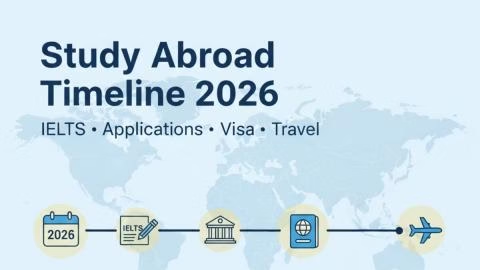
Timeline for Study Abroad (Month-by-Month Plan) – 2026 Guide

Planning to study abroad can feel confusing, especially if you don’t know when to start and what to do. A proper timeline helps you stay organized, avoid last-minute stress, and increase your chances of success. Here’s a simple month-by-month plan for Indian students 👇 12–15 Months Before Intake This is where your journey begins. This stage is all about clarity and research 10–12 Months Before Intake Now start preparing seriously. Early preparation = less stress later 8–10 Months Before Intake Time to start applications.  Apply to multiple options to increase chances 6–8 Months Before Intake Now results start coming.  Choose wisely based on career goals + budget 4–6 Months Before Intake Financial planning stage  This step is crucial for visa approval 3–4 Months Before Intake Visa process begins.  Double-check documents to avoid rejection 2–3 Months Before Intake Almost there  Start mentally preparing for the move Final preparations. 1 Month Before Intake  Stay calm and organized After Reaching Abroad Welcome to your new journey This is where your real experience begins Important Tips Common Mistakes to Avoid Avoiding these can save you from major stress. Final Thoughts A well-planned timeline is the key to a smooth study abroad journey. By following a structured month-by-month plan, students can avoid confusion, meet deadlines, and improve their chances of success. Starting early, staying organized, and taking the right steps at the right time can make your dream of studying abroad a reality.

Timeline for Study Abroad (Month-by-Month Plan) – 2026 Guide Read More »

How to Build a Career Abroad from Scratch (2026 Guide)

Building a career abroad from scratch may feel difficult at first, especially when you are in a new country with no experience or connections. However, thousands of students successfully build strong careers abroad every year. With the right approach, planning, and consistency, it is completely achievable. Start with the Right Course Your career begins with your course choice. Choose a course that has strong demand in the global job market. Fields like IT, healthcare, business, and engineering offer better opportunities. A good course increases your chances of getting a job faster. Build Skills Along with Studies Having a degree alone is not enough. Focus on building practical skills such as communication, problem solving, and technical knowledge. Learn tools and technologies related to your field. Employers value skills more than just qualifications. Gain Experience Early Start gaining experience while studying. Take up internships, part-time jobs, or volunteer work. Even small experiences help you understand the work environment and strengthen your profile. Experience gives you an advantage over other candidates. Create a Strong Resume Your resume is your first impression. Keep it simple and clear. Focus on skills, achievements, and relevant experience. Make sure it is updated with your latest work and projects. A strong resume improves your chances of getting shortlisted. Network and Build Connections Networking plays a crucial role abroad. Connect with people through LinkedIn, university events, and job fairs. Interact with seniors and professionals in your field. Many job opportunities come through referrals and connections. Apply Smartly for Jobs Avoid applying randomly. Apply for roles that match your skills and profile. Customize your resume for each application and stay consistent in your efforts. Smart applications increase your chances of success. Improve Communication Skills Communication is a key factor in securing a job. Work on speaking clearly, building confidence, and maintaining professional communication. Strong communication skills can set you apart from other candidates. Stay Consistent and Patient Getting your first job may take time. Rejections are a normal part of the process. Keep improving your skills and continue applying. Consistency and patience are essential. Understand Work Visa Options After completing your studies, understand your work visa options. Apply for post-study work opportunities and plan your job search accordingly. Early awareness helps you stay prepared. The Reality You Should Know Building a career abroad is not an instant process. It requires effort, patience, and continuous learning. However, once you establish yourself, the growth and opportunities are significant. Final Thoughts Building a career abroad from scratch may seem challenging, but it is entirely possible. With the right mindset, skills, and strategy, students can create successful and long-term careers internationally. Start early, stay focused, and keep improving.

How to Build a Career Abroad from Scratch (2026 Guide) Read More »

What Nobody Tells You About Studying Abroad (2026 Guide)

Studying abroad is often shown as a dream life filled with travel, freedom, and success. While that is partly true, there are many realities that students are not told before they go. Understanding these truths will help you prepare better and avoid surprises. It Feels Lonely in the Beginning One of the biggest realities is loneliness. In the initial days, you may miss your family, friends, and familiar environment. Everything feels new and unfamiliar. This phase is temporary, but almost every student goes through it. You Have to Do Everything Yourself Abroad life means complete independence. You will manage cooking, cleaning, shopping, bills, and studies all by yourself. There is no one to remind or support you daily like at home. This can feel overwhelming at first, but it teaches responsibility. Part Time Jobs Are Not Always Easy Many students think getting a part-time job is simple. In reality, it can take time. Competition is high, and sometimes you may not get a job immediately. Patience and consistent effort are required. Managing Studies and Work Is Tough Balancing academics with part-time work is not easy. You may feel tired, stressed, and pressured at times. Time management becomes very important. Students need to stay disciplined to handle both. Expenses Add Up Quickly Living abroad can be expensive. Apart from tuition, daily expenses like rent, food, travel, and personal costs add up quickly. Financial planning is very important before going. Weather Can Affect You This is something many students ignore. In some countries, weather can be very cold or unpredictable. It can affect your mood, health, and daily routine. Adjusting takes time. Not Everyone Gets a Job Immediately Many students expect to get a job right after graduation. The reality is, it may take time depending on your skills, experience, and job market conditions. Continuous effort and improvement are required. You Will Grow a Lot as a Person Despite all the challenges, this is the biggest truth. You become more independent, confident, and responsible. You learn how to handle real-life situations. This personal growth is one of the most valuable outcomes. It Is Not Always Like Social Media Social media shows only the good side. Travel photos, fun moments, and success stories are highlighted. The struggles, stress, and hard work are often hidden. Understanding this helps set realistic expectations. Final Thoughts Studying abroad is not just about academics or travel. It is a complete life experience with both challenges and rewards. The journey may feel difficult at times, but it shapes you into a stronger and more capable person. Knowing these realities in advance will help you prepare better and make the most of your experience.

What Nobody Tells You About Studying Abroad (2026 Guide) Read More »

Education Loan for Study Abroad – Complete Guide for Indian Students (2026)

Studying abroad is a dream for many Indian students, but the cost can be a major concern. This is where an education loan becomes a powerful solution. An education loan helps students cover expenses like tuition fees, living costs, travel, and more making international education accessible without financial stress. This guide will walk you through everything you need to know. What is an Education Loan for Study Abroad? An education loan is financial support provided by banks or financial institutions to help students pursue higher education abroad. It typically covers: Students can repay the loan after completing their course. Types of Education Loans There are mainly two types of education loans available in India: 1. Secured Education Loan 2. Unsecured Education Loan Students can choose based on their financial situation. Eligibility Criteria To apply for an education loan, students generally need to meet the following criteria: Each bank may have slightly different requirements. Documents Required Students need to submit several documents during the loan application process: Proper documentation increases approval chances. Loan Amount and Coverage The loan amount depends on the lender and student profile. Some lenders may finance up to 100% of the total cost. Interest Rates Interest rates vary depending on the type of loan and lender. Rates usually range between 8% to 14% per annum. Repayment Terms Repayment usually starts after a moratorium period. Loan tenure can go up to 10–15 years, making repayment manageable. Benefits of Education Loan Taking an education loan offers several advantages: It allows students to focus on studies without worrying about expenses. Tips to Get Loan Approved Easily Here are some important tips: A well-prepared application increases approval chances significantly. Common Mistakes to Avoid Students should avoid these mistakes: Careful planning can prevent financial stress later. Final Thoughts An education loan is one of the best ways to turn your dream of studying abroad into reality. With the right planning, proper documentation, and a clear understanding of terms, students can easily manage their finances. Before applying, always compare different lenders, understand interest rates, and choose the option that best suits your needs. With the right financial support, your global education journey becomes much smoother and stress-free.

Education Loan for Study Abroad – Complete Guide for Indian Students (2026) Read More »

Is Studying Abroad Scary? Reality for Indian Students (2026 Guide)

Many students dream of studying abroad, but at the same time, they feel a common fear 😰“Is studying abroad scary?” The honest answer is it feels scary at first, but it’s not as difficult as you imagine. Why Do Students Feel Scared? 😰 It’s completely normal to feel nervous before going abroad. Leaving family for the first timeLiving in a new countryLanguage and communication issuesManaging everything independentlyFear of the unknown These fears happen to almost every student. Reality It’s Scary Only in the Beginning 🌍 The first few days or weeks might feel uncomfortable. You may experience homesickness, culture shock, and difficulty adjusting. But slowly, things start changing. Within a few weeks, students usually make new friends, understand the environment, and become more confident. You Become Independent 💪 One of the biggest changes is independence. You learn how to manage money, cook, travel alone, and take important decisions. This growth is something you don’t get in your comfort zone. You’re Not Alone 🧑‍🤝‍🧑 Many students think they’ll feel lonely but that’s not true. You’ll meet other international students, join communities, and even find Indian groups. You’ll always find people like you. Language Is Not a Big Problem 🗣️ Students often worry about English. Most people are friendly and understandingCommunication improves with timeYou don’t need perfect English Confidence matters more than perfection. You Learn Real Life Skills 🎯 Studying abroad teaches more than academics. Time managementProblem solvingCommunication skillsAdaptability These skills help you in real life and career. Challenges Are Real 😓 There will be challenges. Managing part time jobsBalancing studies and workMissing familyHandling expenses But these challenges make you stronger. The Truth Most Students Realize 🚀 After a few months, most students feel It was scary in the beginning but it was the best decision of my life Tips to Overcome Fear ✨ Talk to students already abroadDo proper researchStay connected with familyBe open to new experiencesDo not isolate yourself Confidence comes with action. Final Thoughts 💛 Studying abroad may feel scary at first, but it becomes a life changing experience. The fear is temporary, but the growth, confidence, and opportunities you gain will stay forever.

Is Studying Abroad Scary? Reality for Indian Students (2026 Guide) Read More »

The Best Cheap Grocery Stores for Students (Country-Wise Guide)

Studying abroad comes with many responsibilities, and managing your daily expenses is one of the biggest challenges. Food is a major part of your monthly budget, and choosing the right grocery store can help you save a lot of money. To make things easier, this guide provides a country-wise breakdown of the best cheap grocery stores for students. Whether you’re in the UK, USA, Canada, Australia, Europe, or Asia, you will find reliable supermarkets where you can buy quality food at student-friendly prices. United Kingdom (UK) The UK has a wide range of budget-friendly grocery chains known for affordable essentials and weekly discounts. 1. ALDI One of the best options for international students. ALDI offers low-priced groceries, fresh produce, bread, dairy, and weekly deals. 2. Lidl Similar to ALDI, Lidl is extremely budget-friendly. Their “Middle Aisle Specials” also give you non-food items for cheap. 3. ASDA ASDA’s “Rollback Prices” and online delivery options make it perfect for students living far from stores. 4. Tesco (Express & Superstore) Tesco Clubcard prices offer huge savings. Superstores are cheaper than Tesco Express. 5. Iceland Great for frozen food, bulk buys, and ready-to-cook items—ideal for busy students. United States (USA) In the U.S., grocery prices vary by state, but these chains consistently offer low prices. 1. Walmart The cheapest overall option with a huge range of products, including groceries, home goods, and toiletries. 2. ALDI Known for low prices and good quality store-brand items. 3. Trader Joe’s Affordable, healthy options, including snacks, frozen meals, and organic items. 4. Costco Requires membership, but excellent for bulk buying. Students can save a lot over months. 5. WinCo Foods Popular in western states, especially for bulk sections and discounted checkout prices. Canada Canada has several supermarkets that cater to students on a budget. 1. No Frills Very cheap, especially with their “Won’t Be Beat” price match guarantee. 2. Walmart Canada Affordable essentials, international food sections, and online pickup options. 3. FreshCo Great for fresh vegetables and fruit. Frequent “Price Drops.” 4. Superstore (Loblaws) Weekly flyers help students save on bulk items and essentials. 5. Giant Tiger Small store, but extremely affordable snacks, frozen foods, and toiletries. Australia Students in Australia rely heavily on these budget supermarkets. 1. ALDI Cheapest overall with high-quality private-label products. 2. Coles Good weekly specials and loyalty program (Flybuys). 3. Woolworths Often slightly more expensive than Coles, but great for fresh produce and sales. 4. IGA Prices vary, but certain branches offer good discounts and local deals. 5. Costco Australia Excellent for bulk buying if students share with roommates. Germany Germany is famous for inexpensive grocery chains. 1. ALDI Süd & ALDI Nord Nationwide, cheapest groceries, great for students. 2. Lidl Affordable fruits, vegetables, bakery, and weekly promos. 3. Penny Market Very popular among students, especially for dairy and bread. 4. Netto Marken-Discount Low-cost store with good fresh produce options. 5. Rewe (Budget Items) Rewe is a little expensive but their basic-brand products are cheap. France For students studying in France, these stores provide value for money. 1. Lidl Very cheap compared to most French supermarkets. 2. Carrefour Market & Carrefour City Great discounts with loyalty card. 3. Auchan Excellent for bulk purchases and household essentials. 4. Franprix Affordable ready-made meals and baguettes. 5. Intermarché Competitive pricing on fresh meat and produce. Finland Finland is expensive overall, but these stores help students save. 1. Lidl Finland The cheapest supermarket in the country. 2. Prisma Affordable and perfect for buying in bulk. 3. K-Citymarket Slightly higher pricing but offers many discount products. 4. S-Market Good value, especially with S-Group membership. 5. K-Market (local) Useful for small purchases, daily deals vary by store. Netherlands Dutch supermarkets known for affordability. 1. ALDI Best for weekly shopping on a low budget. 2. Lidl Cheap bakery items and vegetables. 3. Jumbo Price-matching policy helps students save. 4. Albert Heijn (AH Basic items) AH is expensive but their “Basic” range is affordable. 5. Dirk Very popular among students for low-cost snacks and dairy. Ireland Groceries can be costly, but these stores make it manageable. 1. Lidl Top choice for students. 2. ALDI Affordable, great weekly sales. 3. Dunnes Stores Good discounts with vouchers. 4. Tesco Ireland Cheaper with Clubcard. 5. SuperValu Offers promotions depending on location. Final Thoughts Choosing the right grocery store can significantly reduce your monthly expenses as an international student. No matter which country you study in, there are always affordable supermarkets offering fresh food, essentials, and weekly deals. Planning your meals, buying in bulk, and using store loyalty cards can help you save even more. By knowing where to shop, you can manage your budget wisely and enjoy your study abroad experience without constant financial stress.

The Best Cheap Grocery Stores for Students (Country-Wise Guide) Read More »

Preparing for Interdisciplinary Courses in Foreign Universities

Foreign universities increasingly offer interdisciplinary courses that combine knowledge from multiple fields such as technology and business, psychology and health, or engineering and environmental studies. For international students, these courses can feel both exciting and challenging because they require learning beyond a single subject area. Preparing properly helps students adapt to this flexible and modern style of education. What Are Interdisciplinary Courses Interdisciplinary courses bring together concepts, theories, and methods from different academic disciplines to address complex real-world problems. Instead of studying subjects in isolation, students learn how different fields connect and influence each other. Why Foreign Universities Emphasize Interdisciplinary Learning Modern global challenges such as climate change, artificial intelligence, and public health cannot be solved by one field alone. Universities abroad design interdisciplinary programs to encourage broader thinking, creativity, and collaboration across subject areas. Expect a Mix of Different Teaching Styles Interdisciplinary courses often combine lectures, discussions, case studies, research projects, and presentations. Students may experience teaching methods from multiple departments, which requires flexibility in learning approaches. Be Ready to Learn Outside Your Comfort Zone Students may encounter topics that are not directly related to their previous studies. For example, an engineering student might study ethics or policy, while a business student might learn data analysis. Openness to new subjects is essential for success. Strengthening Basic Knowledge in Related Areas Before the course begins, reviewing basic concepts from related fields can be helpful. Introductory online materials, short courses, or reading background resources can make new topics easier to understand. Improving Adaptability in Learning Methods Each discipline may have different expectations for assignments and exams. Some focus on data and technical accuracy, while others emphasize critical thinking and written analysis. Students must be flexible and willing to adjust their study strategies. Developing Strong Research Skills Interdisciplinary work often requires using sources from multiple fields. Learning how to search academic databases effectively and evaluate different types of sources is an important preparation step. Learning to Communicate Across Disciplines Students must explain ideas clearly to classmates from different academic backgrounds. Avoiding overly technical language and learning to simplify complex concepts improves teamwork and collaboration. Participating Actively in Group Work Many interdisciplinary courses include group projects with students from diverse majors. Respecting different viewpoints and combining skills from various backgrounds leads to stronger project outcomes. Time Management Becomes More Important Balancing reading materials from different subjects can increase workload. Creating a study plan that allocates time for each area prevents last-minute pressure. Understanding Different Assessment Styles Some assignments may involve essays, while others require technical reports, presentations, or creative problem-solving tasks. Carefully reviewing grading rubrics helps students meet varied expectations. Being Comfortable with Open-Ended Questions Interdisciplinary courses often focus on problem-solving rather than fixed answers. Students should be prepared to explore multiple perspectives instead of looking for one “correct” solution. Using Professors and Support Resources Students should not hesitate to seek clarification from instructors when concepts from unfamiliar disciplines seem confusing. Universities also offer workshops and academic support to help students adjust. Building Critical Thinking Skills Interdisciplinary learning strengthens the ability to connect ideas, compare viewpoints, and analyze problems from multiple angles. Developing these skills improves both academic performance and future career readiness. Gaining Career Advantages Employers value graduates who can work across fields, think creatively, and collaborate with diverse teams. Interdisciplinary courses help students develop these practical workplace skills. Final Thoughts Preparing for interdisciplinary courses in foreign universities requires curiosity, flexibility, and a willingness to step beyond familiar subjects. By strengthening foundational knowledge, improving research and communication skills, and staying open to new perspectives, international students can thrive in these dynamic learning environments. Interdisciplinary education not only broadens academic understanding but also prepares students for complex global careers.

Preparing for Interdisciplinary Courses in Foreign Universities Read More »

Scroll to Top