
Ayodhya Foreign Education Services

2027 Scholarships for International Students in France, Germany, and Ireland.

Your blog category

Study in Canada for Indian Students: Complete Guide (2026)

Canada has become one of the most popular destinations for Indian students who want to study abroad. With globally recognized universities, excellent career opportunities, and a welcoming environment for international students, Canada attracts thousands of students every year. Many students choose Canada because it offers high-quality education, post-study work opportunities, and pathways to permanent residency. In this guide, we will explore everything Indian students need to know about studying in Canada. Why Study in Canada? Canada offers several advantages for international students. Some of the key benefits include: Many universities in Canada focus on practical learning and research, which helps students develop skills required for global careers. Top Universities in Canada Canada is home to many world-renowned universities that attract students from across the globe. Some of the top universities include: These universities offer a wide range of programs in fields such as engineering, business, healthcare, and computer science. Cost of Studying in Canada The cost of studying in Canada depends on the university, course, and city. On average: Students should also budget for additional expenses such as accommodation, health insurance, and transportation. Canada Student Visa Process International students must obtain a study permit before traveling to Canada. The visa application usually requires: The study permit allows students to live and study in Canada during their academic program. Part-Time Work Opportunities Canada allows international students to work up to 20 hours per week during academic sessions and full-time during scheduled breaks. Part-time work helps students gain professional experience and support their living expenses. Common student jobs include: Post-Graduation Work Permit (PGWP) After completing their studies, international students can apply for the Post-Graduation Work Permit (PGWP). The Post-Graduation Work Permit allows graduates to work in Canada for up to three years, depending on their study program. This work experience can help students qualify for permanent residency. Final Thoughts Canada continues to be one of the best destinations for international students due to its high-quality education, welcoming immigration policies, and strong job opportunities. With proper planning, students can gain valuable academic and professional experience while studying in Canada. For Indian students looking for global career opportunities and long-term settlement options, Canada remains an excellent choice for higher education.

Study in Canada for Indian Students: Complete Guide (2026) Read More »

How to Get PR in Germany After Studying (Step-by-Step Guide)

Germany is one of the most attractive destinations for international students because it offers excellent education, strong job opportunities, and a clear pathway to long-term residence. Many students who complete their studies in Germany aim to settle there permanently. The good news is that Germany provides a structured route for graduates to obtain Permanent Residency (PR). In this guide, we explain how international students can move from a student visa to permanent residency in Germany. What is Permanent Residency in Germany? Permanent Residency in Germany is officially known as the Settlement Permit (Niederlassungserlaubnis). It allows non-EU citizens to live and work in Germany without time restrictions. With PR, you can: Step 1: Complete Your Degree in Germany The first step toward obtaining PR is successfully completing your degree at a recognized German university. Many international students graduate from well-known institutions such as: Graduating from a recognized university makes it easier to find employment and begin the next step toward residency. Step 2: Apply for a Job Seeker Visa After graduation, international students can apply for a Job Seeker Visa. This visa allows graduates to stay in Germany for up to 18 months to search for a job related to their field of study. During this period, graduates can: Finding a job in your field is an important step toward obtaining long-term residence. Step 3: Get a Work Permit or EU Blue Card Once you secure a job related to your degree, you can apply for a work permit or the EU Blue Card. The EU Blue Card is issued to highly skilled professionals with a qualifying salary. Benefits of the EU Blue Card include: This permit is one of the most popular routes for international graduates who want to build their careers in Germany. Step 4: Work and Contribute to Social Security To become eligible for PR, graduates must work in Germany and contribute to the country’s social security system. Typical requirements include: This employment period demonstrates financial stability and integration into German society. Step 5: Apply for Permanent Residency International graduates can apply for permanent residency after meeting certain work and residence requirements. Typical timelines include: Once approved, the settlement permit allows you to live and work in Germany indefinitely. Advantages of Getting PR in Germany Permanent residency offers several long-term benefits for international students who want to build their future in Germany. Key advantages include: These benefits make Germany an attractive country for international graduates planning their long-term careers. Final Thoughts Germany provides one of the most student-friendly immigration pathways in Europe. International students who complete their degree, secure a skilled job, and contribute to the economy can gradually move toward permanent residency. With proper planning, career development, and language skills, studying in Germany can open the door to long-term professional and personal opportunities in one of Europe’s strongest economies.

How to Get PR in Germany After Studying (Step-by-Step Guide) Read More »

Top 7 High-Demand Courses to Study Abroad in 2026

Choosing the right course is one of the most important decisions for students planning to study abroad. The course you select not only determines your academic journey but also influences your future career opportunities, salary potential, and chances of working internationally. With global industries evolving rapidly, some fields are experiencing high demand for skilled professionals. Students who pursue these courses abroad often gain access to better career opportunities and international exposure. Here are seven high-demand courses that are popular among international students in 2026. 1. Data Science and Artificial Intelligence Data Science and Artificial Intelligence are among the fastest-growing fields worldwide. Companies across industries rely on data analysis and AI technologies to make better decisions and improve efficiency. Students studying these fields learn skills such as data analysis, machine learning, programming, and statistical modeling. Graduates often find opportunities in technology companies, financial institutions, healthcare organizations, and research centers. 2. Business Administration and Management Business Administration remains one of the most popular courses for international students. It provides a strong foundation in leadership, management, marketing, finance, and entrepreneurship. Students pursuing business programs abroad gain global exposure and develop skills needed to manage organizations in international markets. Many graduates go on to work in multinational companies or start their own businesses. 3. Computer Science and Information Technology The technology sector continues to grow rapidly, creating high demand for professionals with expertise in software development, cybersecurity, cloud computing, and system design. Computer Science programs teach programming languages, algorithms, database management, and software engineering. Graduates often find career opportunities in technology companies, startups, and global IT firms. 4. Engineering Engineering remains one of the most respected and in-demand fields for students studying abroad. Specializations such as mechanical engineering, civil engineering, electrical engineering, and renewable energy engineering are particularly popular. Engineering programs abroad often provide access to modern laboratories, advanced research facilities, and industry partnerships that help students gain practical experience. 5. Healthcare and Nursing Healthcare professionals are in high demand across many countries. Courses in healthcare, nursing, and related medical fields provide students with the opportunity to work in hospitals, clinics, and healthcare organizations. Many countries actively recruit skilled healthcare workers, making this field attractive for students looking for stable and rewarding careers. 6. Finance and Accounting Finance and accounting programs prepare students for careers in banking, investment management, financial consulting, and corporate finance. These courses teach financial analysis, risk management, accounting principles, and investment strategies. Graduates often work in global financial institutions and multinational corporations. 7. Digital Marketing With businesses increasingly shifting online, digital marketing has become an essential skill in the modern business world. Students studying digital marketing learn about social media marketing, search engine optimization (SEO), content marketing, and online advertising. This field offers diverse career opportunities in marketing agencies, startups, and international companies. Final Thoughts Selecting the right course is a crucial step for students planning to study abroad. Fields such as data science, engineering, business, and healthcare continue to offer strong career prospects and global opportunities. Before choosing a course, students should consider their personal interests, long-term career goals, and the job demand in their preferred study destination. With careful planning, students can choose programs that not only provide quality education but also open doors to successful international careers.

Top 7 High-Demand Courses to Study Abroad in 2026 Read More »

How Much Money Do Students Really Need Per Month Abroad? (Real Cost Breakdown)

One of the biggest questions students have before studying abroad is: “How much money will I need every month?” Understanding living expenses is important for proper financial planning and avoiding unexpected costs while studying in another country. Monthly expenses vary depending on the country, city, and personal lifestyle. However, most international students spend money on common categories such as accommodation, food, transportation, and personal expenses. This guide provides a general monthly cost breakdown for students studying abroad Accommodation Accommodation is usually the largest monthly expense for international students. Costs depend on whether students live in university dormitories, shared apartments, or private accommodation. Typical options include: Students who choose shared accommodation often save more money compared to living alone. Food and Groceries Food expenses depend on whether students cook their own meals or eat outside frequently. Cooking at home is generally much cheaper than dining out regularly. Students often reduce costs by: Many universities also have affordable cafeterias where students can buy meals at reasonable prices. Transportation Transportation costs depend on how far students live from their university and the available public transport options. Many cities provide discounted transportation passes for students, which helps reduce monthly travel costs. Public transportation systems such as buses, trains, and metro services are commonly used by international students. Health Insurance Health insurance is required for international students in many countries. The cost may vary depending on the country and insurance provider. Some universities include health insurance as part of the student enrollment process, while others require students to arrange it independently. Study Materials Students may need to spend money on books, study materials, printing, and other academic resources. Some courses require specialized materials or software, which may increase these expenses. Many students reduce these costs by: Personal and Entertainment Expenses Apart from essential expenses, students also spend money on personal activities such as entertainment, shopping, or traveling. Managing these expenses wisely can help students stay within their monthly budget. Average Monthly Budget for Students While costs vary between countries, many international students typically spend between $700 and $1500 per month depending on their lifestyle and location. Major cities usually have higher living costs compared to smaller towns or student-friendly cities. Tips to Reduce Living Expenses Abroad Students can manage their budget more effectively by following some practical tips: Proper budgeting can help students enjoy their study abroad experience without financial stress. Final Thoughts Understanding the cost of living abroad is essential for students planning to study internationally. Monthly expenses depend on the country, city, and personal lifestyle, but careful budgeting can help students manage their finances effectively. By choosing affordable accommodation, using student discounts, and planning expenses wisely, international students can make their study abroad journey both successful and financially manageable.

How Much Money Do Students Really Need Per Month Abroad? (Real Cost Breakdown) Read More »

Cheapest Countries to Study Abroad for Indian Students (2026 Guide)

Studying abroad is a dream for many Indian students, but the cost of education can sometimes feel overwhelming. The good news is that several countries offer quality education at affordable tuition fees and reasonable living costs, making it possible for students to study internationally without spending a huge amount of money. Choosing the right country can help students save money while still receiving a globally recognized degree. Below are some of the cheapest countries to study abroad for Indian students in 2026. Germany Germany is one of the most affordable study destinations in Europe. Public universities in Germany usually charge very low tuition fees, and students mostly pay a small semester contribution. Germany is especially popular for courses in engineering, technology, and business. Students also benefit from strong research facilities and a well-developed job market. Living costs are manageable, especially if students live in shared accommodation. France France offers relatively affordable tuition fees compared to many other Western countries. The government supports higher education, which helps keep education costs lower. France also offers a wide range of English-taught programs, making it attractive for international students. Students studying in France also get the opportunity to experience rich culture, history, and global networking opportunities. Finland Finland is known for its excellent education system and modern teaching methods. Although tuition fees apply for international students, many institutions offer scholarship opportunities that reduce the overall cost. Finland also provides a safe environment and high quality of life for students. Poland Poland is becoming increasingly popular among international students due to its affordable tuition fees and lower living costs compared to many European countries. Students can find many English-taught programs in fields like business, engineering, and information technology. Hungary Hungary offers good-quality education at relatively low tuition fees. The country also provides various scholarship opportunities for international students. Living costs in Hungary are affordable, and cities are student-friendly, making it a great destination for international education. Czech Republic The Czech Republic has a strong academic reputation and offers a variety of study programs for international students. Living expenses are moderate, and students can experience a vibrant European lifestyle while pursuing their education. Lithuania Lithuania is an emerging study destination in Europe. The country offers low tuition fees and affordable living costs, which attract many international students. Students can study programs in fields such as business, technology, and social sciences. Malaysia Malaysia is known for its low cost of education and living expenses. The country also offers modern campuses and internationally recognized degree programs. Malaysia’s multicultural environment makes it comfortable for international students. Turkey Turkey offers affordable tuition fees along with a rich cultural experience. The country has been actively welcoming international students and expanding its higher education sector. Students can also explore scholarship opportunities while studying in Turkey. UAE (Dubai) Dubai has become a global education hub with many international institutions offering degree programs. While tuition fees vary, students can still find competitive programs and scholarship opportunities. Dubai also offers strong career opportunities and exposure to a global business environment. Final Thoughts Studying abroad does not always have to be expensive. Several countries offer affordable tuition fees, reasonable living costs, and scholarship opportunities for international students. Before choosing a destination, students should carefully research tuition fees, living expenses, visa requirements, and career opportunities. With proper planning, students can achieve their dream of studying abroad while staying within their budget.

Cheapest Countries to Study Abroad for Indian Students (2026 Guide) Read More »

USA vs UK – Which is Better for Indian Students? (2026 Guide)

Choosing between studying in the USA and the UK is a common dilemma for Indian students. Both countries offer world-class education, globally recognized degrees, and excellent career opportunities. However, they differ in terms of cost, duration, work opportunities, and lifestyle. Understanding these differences will help students make the right decision based on their goals. Education System Both countries are known for their high-quality education systems. In the USA, students get a flexible education system where they can explore different subjects before choosing a specialization. In the UK, the system is more focused and specialized, meaning students study their chosen subject in depth from the beginning. Course Duration One of the biggest differences is the duration of courses. The UK is often preferred by students who want to save time and complete their degree faster. Cost of Studying Cost is an important factor for most students. Even though the UK may seem cheaper, students should consider total expenses including living costs. Work Opportunities During Study Both countries allow students to work part-time while studying. Part-time jobs help students manage their living expenses and gain work experience. Post-Study Work Opportunities After graduation, both countries offer options to stay and work. The UK offers a more straightforward post-study work option compared to the USA. Job Opportunities Both countries have strong job markets, especially in fields like: The USA has a larger job market, but competition is also higher. The UK offers good opportunities with easier access to post-study work options. Lifestyle and Environment Students should choose based on their personal preferences and comfort. Which One Should You Choose? Choose USA if you: Choose UK if you: Final Thoughts Both the USA and the UK are excellent choices for Indian students. The right choice depends on your career goals, budget, and personal preferences. Students should carefully compare factors such as course duration, cost, and job opportunities before making a decision. With proper planning, both destinations can provide a strong foundation for a successful international career.

USA vs UK – Which is Better for Indian Students? (2026 Guide) Read More »

Can I Study Abroad After 12th? Complete Guide for Indian Students (2026)

Many students in India wonder, “Can I study abroad after 12th?”The answer is yes– students can absolutely pursue their higher education abroad right after completing their 12th grade. In fact, studying abroad after 12th has become increasingly popular because it gives students early exposure to global education, better career opportunities, and international experience. This guide will help you understand everything you need to know. Can Indian Students Study Abroad After 12th? Yes, Indian students can apply to international universities after completing their 12th grade from recognized boards. Students can apply for: Most countries accept Indian qualifications, but admission requirements may vary depending on the course and destination. Popular Courses After 12th Students can choose from a wide range of courses based on their stream and interests. For Science Students For Commerce Students For Arts/Humanities Students Choosing the right course is very important as it shapes your future career. Requirements to Study Abroad After 12th To apply for universities abroad, students generally need: Some courses may also require portfolios or entrance tests. Countries You Can Choose Students have multiple options when choosing a country to study abroad after 12th. Popular destinations include: Each country offers different benefits in terms of cost, education system, and career opportunities. Cost of Studying Abroad After 12th The cost depends on the country, university, and course. Expenses include: Students can reduce costs through: Benefits of Studying Abroad After 12th Studying abroad at an early stage offers many advantages: Students also get more time to build international careers compared to studying abroad after graduation. Challenges Students May Face While studying abroad has many benefits, students may face some challenges: However, these challenges help students grow and become more independent. Step-by-Step Process Here’s a simple process to follow: Final Thoughts Yes, studying abroad after 12th is not only possible but also a great opportunity for Indian students to build a successful global career. With proper planning, the right course selection, and timely application, students can achieve their dream of studying internationally. Starting early gives students a strong advantage in terms of career growth, global exposure, and personal development.

Can I Study Abroad After 12th? Complete Guide for Indian Students (2026) Read More »

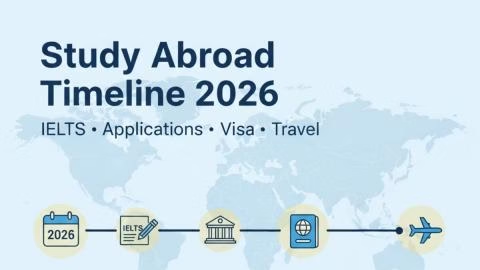
Step-by-Step Process to Study Abroad (From Start to Visa) – 2026 Guide

Studying abroad may seem complicated, but if you follow the right steps, the process becomes simple and manageable. Many students feel confused about where to start, what to prepare, and how to apply. This guide explains the complete step-by-step process to study abroad, from choosing a course to getting your student visa approved. Step 1: Decide Your Course and Career Goal The first and most important step is choosing the right course based on your interests and career goals. Ask yourself: Choosing the right course is crucial because it directly affects your future job opportunities. Step 2: Choose the Right Country Different countries offer different benefits such as cost, job opportunities, and PR options. While selecting a country, consider: Choosing the right country helps you plan your budget and career path effectively. Step 3: Shortlist Universities Once you finalize your course and country, the next step is selecting universities. While shortlisting, check: It is recommended to apply to multiple universities to increase your chances of admission. Step 4: Prepare Required Documents Before applying, you need to prepare all necessary documents. Important documents include: Having your documents ready in advance helps avoid delays. Step 5: Apply to Universities Students can apply through: Make sure to: After submission, wait for the admission decision. Step 6: Receive Offer Letter If your application is successful, you will receive an offer letter from the university. Types of offers: You need to accept the offer and proceed to the next step. Step 7: Arrange Financial Requirements Students must arrange funds for: This may include: Financial proof is important for visa approval. Step 8: Apply for Student Visa After receiving your offer letter, you can apply for a student visa. Visa requirements usually include: Students may also need to attend a visa interview depending on the country. Step 9: Book Tickets and Prepare for Travel Once your visa is approved, you can: Make sure to carry all important documents while traveling. Step 10: Start Your Study Abroad Journey After reaching your destination: This is the beginning of your international education journey. Final Thoughts Studying abroad is a step-by-step process that requires proper planning and preparation. By following the right steps from choosing your course to securing your visa you can make your journey smooth and successful. Students should start early, stay organized, and seek proper guidance whenever needed. With the right approach, studying abroad can open doors to global opportunities and a successful career.

Step-by-Step Process to Study Abroad (From Start to Visa) – 2026 Guide Read More »

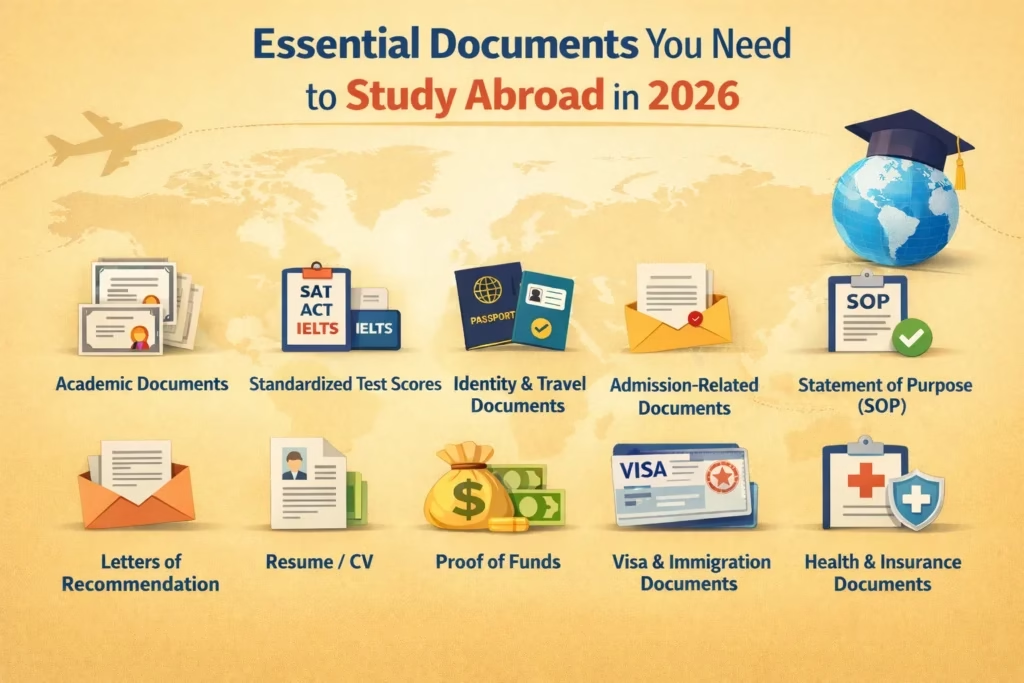
Documents Required to Study Abroad for Indian Students (Complete Checklist 2026)

Studying abroad is an exciting journey, but one of the most important steps in the process is preparing the required documents. Many Indian students face delays or rejections simply because of missing or incorrect documentation. To make your application process smooth, it is essential to understand all the documents required for studying abroad. This guide provides a complete checklist that every student should follow. Academic Documents Academic documents are the foundation of your application. Universities evaluate your previous education to determine your eligibility. You will need: Make sure all documents are clear, accurate, and properly scanned. Passport A valid passport is mandatory for studying abroad. Requirements: If you do not have a passport, apply for one as early as possible. Statement of Purpose (SOP) The Statement of Purpose (SOP) is one of the most important documents in your application. It explains: A strong SOP can significantly increase your chances of admission. Letters of Recommendation (LOR) Many universities require Letters of Recommendation from teachers, professors, or employers. These letters should: Usually, 2–3 LORs are required. Resume (CV) A well-structured resume helps universities understand your background. Include: Keep your resume clear and professional. English Proficiency Proof Most universities require proof of English proficiency. This can include: Requirements vary depending on the country and university. Financial Documents Students must show proof that they can afford their education and living expenses. Common financial documents include: These documents are important for both admission and visa processing. Visa Documents Once you receive your admission letter, you will need additional documents for your student visa. These may include: Visa requirements vary depending on the country. Additional Documents (If Required) Some universities or countries may ask for extra documents such as: Always check the specific requirements of your chosen course and university. Final Thoughts Preparing the right documents is a crucial step in your study abroad journey. Missing or incorrect documents can lead to delays or even rejection of your application. Students should start preparing their documents early, double-check all details, and keep both digital and physical copies ready. With proper planning and guidance, the application process becomes much smoother and stress-free.

Documents Required to Study Abroad for Indian Students (Complete Checklist 2026) Read More »

Future Scope of Studying Abroad in 2026

Studying abroad has always been a popular choice among Indian students, but in 2026, the opportunities and benefits have grown even more. With globalization, technological advancements, and increasing demand for skilled professionals, studying abroad is no longer just about education-it is about building a global career. Understanding the future scope of studying abroad can help students make informed decisions about their education and long-term goals. Global Career Opportunities One of the biggest advantages of studying abroad is access to international job markets. Many countries offer post-study work opportunities, allowing students to gain real-world experience after completing their degree. Graduates from international universities are often preferred by employers because they: This increases their chances of securing high-paying jobs in multinational companies. High Demand for Skilled Professionals In 2026, industries such as technology, healthcare, engineering, and business are facing a shortage of skilled professionals worldwide. Students who study abroad in fields like: have strong career prospects and better job security. Countries are actively looking for international talent, which creates more opportunities for students. Better Return on Investment (ROI) Although studying abroad requires financial investment, the long-term returns can be significant. Benefits include: Many students recover their investment within a few years of working abroad. Opportunities for Permanent Residency (PR) Several countries offer pathways for international students to settle after completing their studies. Students can: This makes studying abroad a long-term career and settlement opportunity. Exposure to Advanced Education Systems Studying abroad gives students access to: This helps students develop industry-relevant skills that are highly valued in the global job market. Personal Growth and Independence Apart from academic and career benefits, studying abroad helps students grow personally. Students develop: These qualities are essential for success in today’s global world. Networking and Global Connections Studying abroad allows students to build a strong international network. Students interact with: These connections can help in finding job opportunities and building a global career. Future Trends in Studying Abroad In 2026, some key trends are shaping international education: Students who align their education with these trends can benefit the most. Final Thoughts The future scope of studying abroad in 2026 is very promising for Indian students. With global career opportunities, high demand for skilled professionals and pathways to long-term settlement, studying abroad can be a life-changing decision. However, students should carefully choose the right course, country, and university based on their career goals and financial situation. With proper planning and guidance, studying abroad can open doors to a successful and rewarding future.

Future Scope of Studying Abroad in 2026 Read More »

Scroll to Top